Overheating under No Load
One common fault is overheating, usually after reconnecting. Never connect the input phonos with a) the power on or b) within 3 minutes of switching off the power. This is usually refered to as “hot plugging”. Signal sources can also oscillate at high frequencies which cause overheating and potential damage to the power amp and/or speakers.
The amplifiers hold substantial energy power in the power supply capacitors and stay energised for a long time after powering down. When the amplifier is connected via the phono plug, only the inner tip terminal is initially in contact. This can induce very high frequency oscillation in the amplifier PCB. This damages the high frequency stabilising load on the PCB which is often called the zobel network. Once hot plugging has detroyed this network the amplifier is no longer stable. This can damage the speakers and cause rapid overheating of the heatsink attached to the PCB. Sometimers just replacing the shunt resistor in the shunt zobel network will fix the fault. Use a minimum 1 Watt component. Most commonly used is 3R9 but it could be 8R2.
Amplifier Powered but no Sound
This can happen if the electronic shutdown has triggered. Occasionally transisitors will become leaky with age and the shutdown mechanism will operate for no reason. Reset as below.
Since 2003 the PCBs have had a high frequency detector, which generally (but not always) puts the amplifier into standy mode before damage occurs. To reset from standby mode, unplug the amplifier for 10 minutes. The overcurrent detector can also cause a shutdown. The remedy is the same.
If an amplifier gets hot with little or no signal, suspect hot plugging damage and contact Crimson “E” Series Amplifiers Crimson or myself.
Power Amplifier Hums at zero volume from the preamp.
There are few causes.
- The amplifier has an old type “square” transformer. These leak field about 50 times worse than a toroid. The only real solution is to replace with a toroid. A bracket may be needed to hold the transfomer edgeways in order to fit.
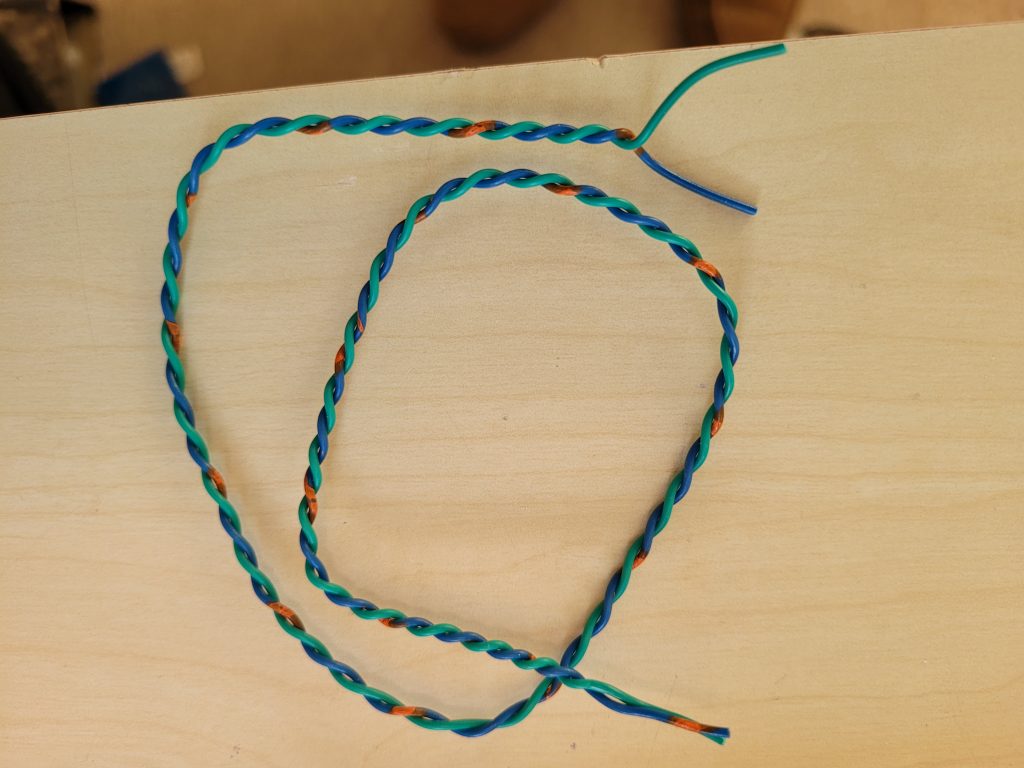
- The amplifier has the wrong internal signal cable (see image below). At some point a ribbon type signal cable was fitted due it having “magic powers”. This cable does not conform to good engineering practice. It is wide open to both magnetic and electrostatic interference. See image below. Measured hum levels could be in the hundreds of microvolts RMS and will be audible. A simple solution is to use a twisted cable pair as a replacment (see image below). A screened cable may be even better but harder to fit. Take care to get the signal and ground conductors the correct way round. Hum & noise can be less than 50uV.
- The reservoir capacitors may have failed. Some 630s were built with 50V capacitors which ran at 50V with no safety margin.They last some years in general but will fail prematurely. Replace with 63V ones of 10,000uF or better 22,000uF. Slit foil or other audiophile capacitors will gain no sonic improvent. This is because the amplifier is carefully designed so as not to “see” its own power supply. In fact this is a major reason for the transparent sound. 620s need 50V capacitors, 630s need 63V capacitors, and 640s need 80V capacitors.
- Some Crimson amps were class 1 and mains earth was also the signal earth. Any other piece of mains equipment that is mains earthed will create a hum loop. NEVER remove a safety earth, The Crimson amps can be modified to have a ground loop breaker rectifier, and this prevents the problem.
- Distorted sound. Most likely PCB failure. Organise a repair/replacement PCB.
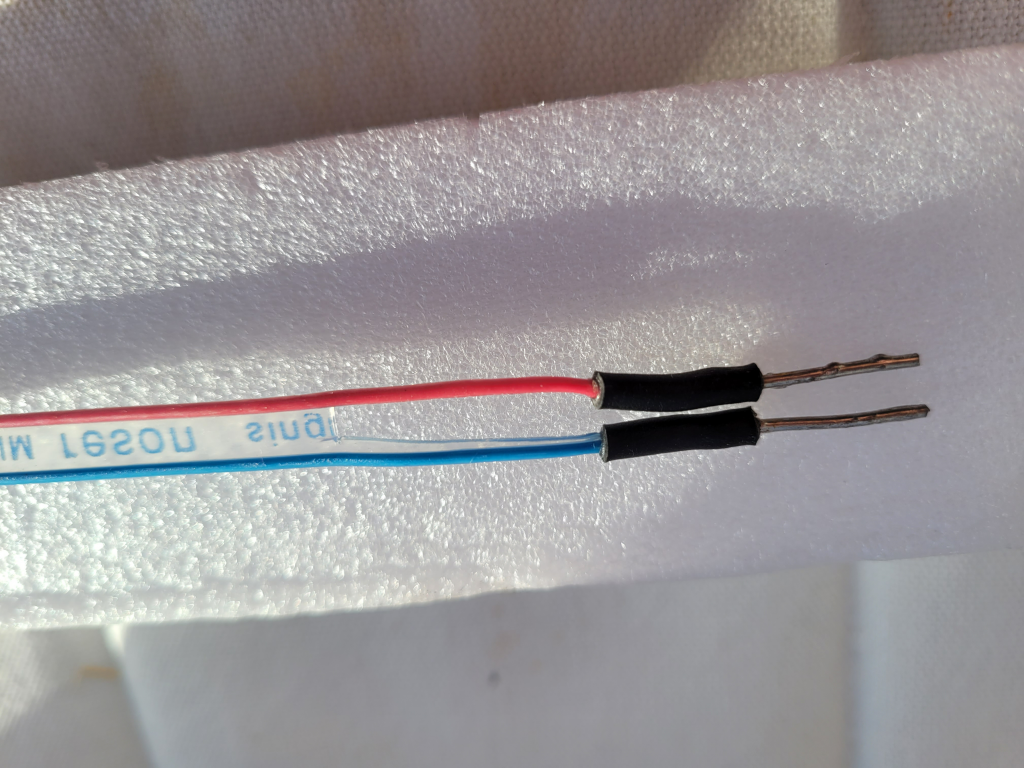
Above:Image of non-suitable cable. See paragraph 2 above.
Below is a photo of a suitable DIY cable. This can be made in seconds by clamping two wires in the chuck of a small hand drill, holding the pair some distance away, then spinning the drill chuck. The twist rate is not crucial. I like to use green for signal ground. Solid core wires such as 1/0.6 are easier to use as there are no loose strands to poke out and cause short circuits.